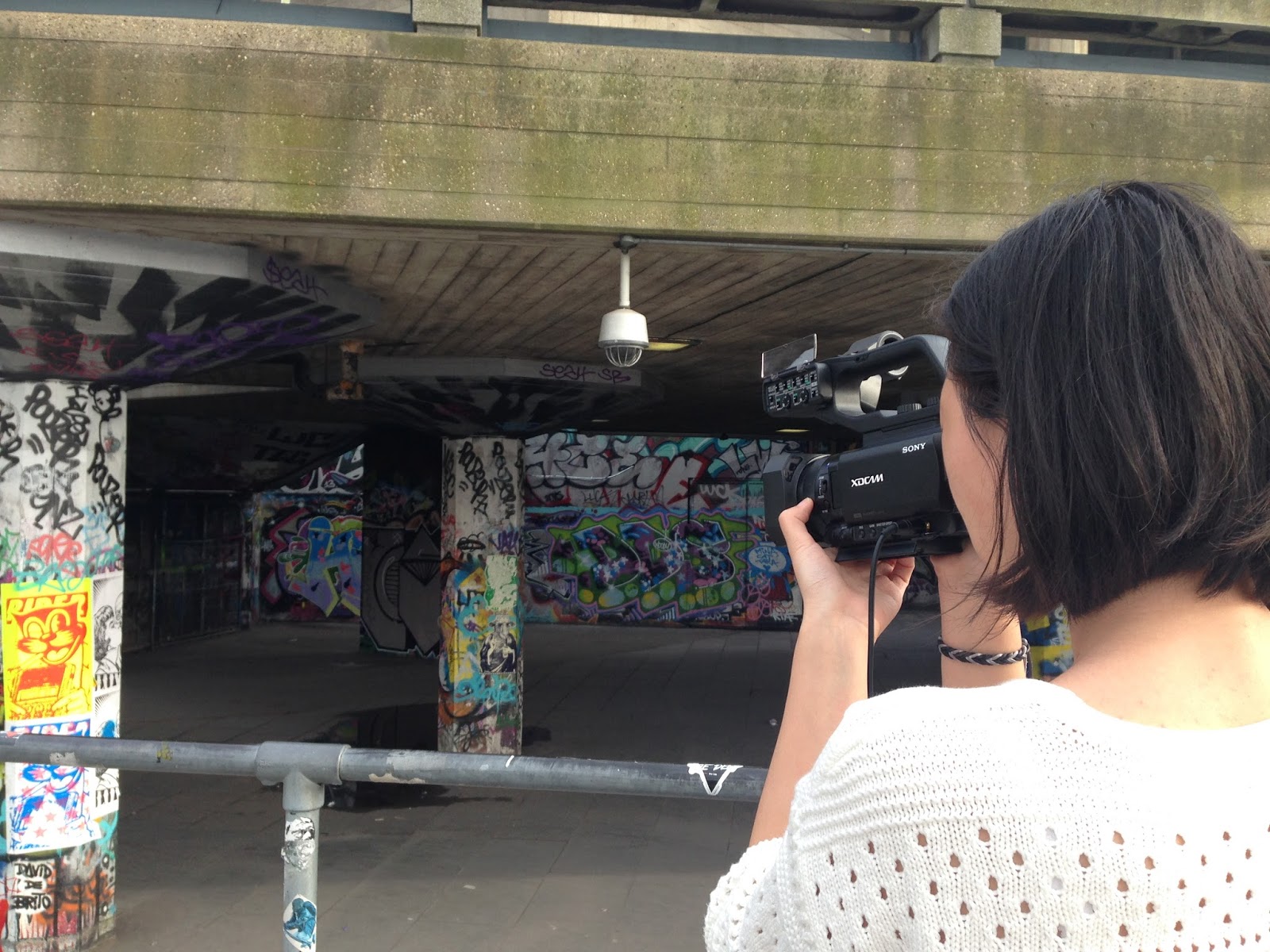
Thursday, 21 April 2016

Prep for tomorrow's shot

Tomorrow we will be filming with a skateboarder, Sam, in order to gain more personal answers that both relate to the brief, and the interview answers we already have.

Interview questions:
  • How long have you been skating?
  • How often do you skateboard?
  • What does skateboarding mean to you personally?
  • What kind of impact does it have on your everyday life?
  • Are there any negative aspects that effect you personally?
  • How do others view you as a skater?
  • Do you think there is a surrounding drug culture?
  • If so, do you have any personal stories related to this?
  • What would you say in response to these negative aspects?
  • Would you say skateboarding is beneficial? Why?
  • How would you justify skate culture?
  • Do you think there's a wider skateboarding culture?
  • Would you say that skaters are outcast from the rest of society?
  • Thoughts on professional skateboarding?
  • What do people think of you being a skater - not cool?
  • Are you part of skate community?
We also plan to film at The Level again and get some more shots of the skateboarders. We would like this to look more artistic than the shots we already have. This idea is inspired by Fitzroy Lodge, which features 5 different boxers:


Wednesday, 20 April 2016

Structuring Narrative


I went through all the footage we have, combining the interviews from the last shoot and from what he had in the pilot. I created a very rough structure of our narrative.

The opening of the documentary will feature a personal interview from the main subject, Tristan. Maddie recorded this interview alone so I have not listened to it yet. However I left a space for where this should go, and put some cutaways from when we previously filmed him.

The next part of the video will feature the oppositional view of skateboarding. The main topics covered in the interviews were:

  • Parents think there is a correlation between skateboarding and drug culture
  • Abundant stereotypes of meat heads/slackers
  • Some people often miss school to smoke at skatepark

This then transitions into the idea that these preconceptions aren't true. Instead it is argued that skateboarding is beneficial. The interviews state that the skaters push each other to do more tricks. The video will then show footage of these skateboarding performing, in an observational style, without narration.

The next section is from the skateboarders perspectives and how they justify their own culture. The points raised were:

  • Skateboarding been around since 50s/60s
  • Appeals to different age ranges
  • More than just a sport
  • A lot of skaters working class
  • Has a sense of freedom 

The conclusion of the documentary is centred around the idea that skateboarders are outcast from society.

  • When they were younger it was not cool to skate
  • Now it has become more popular
  • Some people think it's lame
  • Through skateboarding you become accepted into a small community
  • Not accepted as a real career
  • Not enough resources/skateparks 
  • More skateparks, might be better in the future 


Monday, 18 April 2016

Looking Through Footage


I went through all the footage that we filmed in London, and cut up everything that was useable. We have 10 minutes of interview that we can use, and 7 minutes of cutaway footage.

There were a few main topics mentioned that overlapped in the different interviews. These were:
  • Skate culture viewed as delinquent
  • Not sustainable (not enough resources)
  • It's not as bad as people think
  • Not many places to skate
  • A lot of people dislike skate culture
    Think that it's lame
    Not serious
  • Have to push each other to be better
I think we should group these ideas together, to form the basis our documentary. We can use the negative ideas and then relate back to how the skaters view themselves, and the benefits of skateboarding. I think it was interesting to hear the responses of the children who were aged 11 and their thoughts on skateboarding in the future. I think it would be good to end our documentary by making the audience think about these ideas, in a rhetorical style.

Jessie and I watched one of the student videos from last year to get some ideas on how to improve our own video:
To You, The Sea
  • Establishing/location shot (x3)
  • Mid shot of subject looking directly into the camera
  • Subject performing action (swimming, surfing, etc.)
  • How the sea impacts the subject's life
I think for our introduction we should include a montage of slow motion shots of our subject. This would give the audience a dramatic insight to the main character, whilst building up to the main narrative.

Thursday, 14 April 2016

Workshop 9

Today we looked through and edited the footage we already have. I believe we still have a lot to work on, since it's currently very disjointed, and we don't get a full story.


We edited a short sequence, from what we filmed at the House of Vans. Pete suggested that we have a one minute clip in the middle of the film that was just following one character around, performing tricks. I'm not too sure if this will work, it depends on the rest of what we film. 

As a group, we agreed that we need to have another interview from just one person that will tie together the whole narrative. Maddie said that she would interview her friend Tristan tonight about his experiences.

More feedback from pilot:

  • We should focus on how skaters view their own identities in relation to others
  • It should be a more personal view of themselves
  • We should make it less news-like, and shouldn't focus too much on the oppositions view

Thursday, 7 April 2016

Workshop 8

Interview Techniques:

  • We must figure out what we want to know from the interviewee and why
  • Avoid closed questions
  • Use questions such as "tell me about..."
  • Talk generally about interview beforehand to make the subject more comfortable
  • When the interviewee looks at the interviewer it creates variety
  • We should plan our questions around specific camera shots; there should therefore be a signal between the director and cameraman, on when to change these shots
Sound Editing:
  • Do not use MP3 sounds, since they lose 90% of the audio
  • Instead use WAV, FLAC, or IFF
  • It's best to do sound design after the pictures are locked, and no more edits will occur
  • Record background noise (presence track) to fill in gaps in audio
  • Don't edit with headphones on, as there is too much bass
  • Try listening the sound on the TV to hear how it compares to other audio
  • Use sound bridges to allow the audience to guess what's happening next
Feedback from Pilot:
  • Good music which matches the rhythm of the narrative
  • We used different age ranges
  • Good use of slow motion
  • Some over exposed shots, with too much contrast
  • Uneven sound levelling
  • It seemed too much like a news report, not documentary. This was because it was just talking heads and cutaways
  • We should try to tell the story of skaters being outcast from society
  • We should also try to just follow one character

Friday, 1 April 2016

Day 3 Shoot

Today we had our filming shoots in central London.


We firstly filmed on the Southbank at the skatepark, in recording the skaters in observational style. We also recorded two interviews, firstly with a father and son who gave contrasting ideas about skateboarding culture. This was useful as it shows the tension between those who skate and those who don't, which relates to the brief (self and other). We decided to use these subjects as they were standing watching the skateboarders and appeared to have an interest. However since we were so close to the action, it was hard to hear what they had to say, and probably didn't record very well.

We also recorded an interview with a woman from California and her British nephew. They were both in favour of skateboarding, but had different perspectives due to being from different locations. The nephew used to be a skater himself, but claimed it was harder to find places to skate as he got older. We filmed this interview further away from where the skaters were in order to hear their voices clearer. The downside was that it was quite sunny where we were stood.


We then filmed inside House of Vans. As soon as we arrived we were greeted by 11-year-old Patrick, who showed us around the entire venue, whilst providing details about Vans and his own experiences of the venue. We recorded him as he gave us a tour. We also recorded fill shots of the venue, and various skaters that were about. We then recorded a formal interview with Patrick and his friend Lucian. They mostly spoke about their love for skateboarding and why they do it. I wasn't able to ask them some of the deeper questions that I'd asked other interviewees, such as those regarding drugs, since they were too young. I still think that these interviews were useful to show the contrast between skaters of different ages. I collected both their email addresses and their parents' email addresses so that I could send them release forms.


Finally we recorded some extra fill shots down Leake Street, which is completely covered in graffiti, which has strong connotations to skate culture. There were some skaters around that we filmed and other people who were spray painting.

In general I think this was a successful day of filming, since we got a range of different perspectives.

Contacting House of Vans

I've included here the screenshots of the emails I sent to the House of Vans, and their response, prior to visiting:


It took me the weekend to reply to them, as I had to confirm with the rest of the group what days they would be available. Unfortunately, this may have been too long as I didn't get a response back from them again.

When I went to visit House of Vans on Saturday, I received the emails of a couple of members of staff, who I could contact directly:


This is great to know that our shoot is confirmed, and we shouldn't have any problems arise.